
With the onset of monsoons, the largest creeper in India, Bauhinia vahlii also known as Camel’s foot climber, locally known as Maloo climber is in full bloom along the hillslopes in the lesser Himalayas. The flowering in this plant species starts from the month of April – June. Bauhinia vahlii or Panera vahlii is a perennial creeper native to the Indian subcontinent.This plant species is found along the Himalayan extending from Kashmir to Sikkim, upto an altitude about of 1500 m. It is a fast-growing climbing shrub which can extend upto tree canopy covering the entire span of the host plant.

Eventhough, Maloo climber is considered as a problematic species with respect to the overall well-being of trees, this plant has multiple uses. The seeds, leaves, pod and flowers are the edible. The seeds of the plant are aphrodisiac can be eaten raw or fried and cooked as a pulse. The leaves are mucilaginous and have antiinflammatory properties. The leaves protect soil from erosion are also used for thatching, making plates, cups etc . The fibrous inner bark is used in making ropes. The stems are used for basketry, matting, and wickerwork.
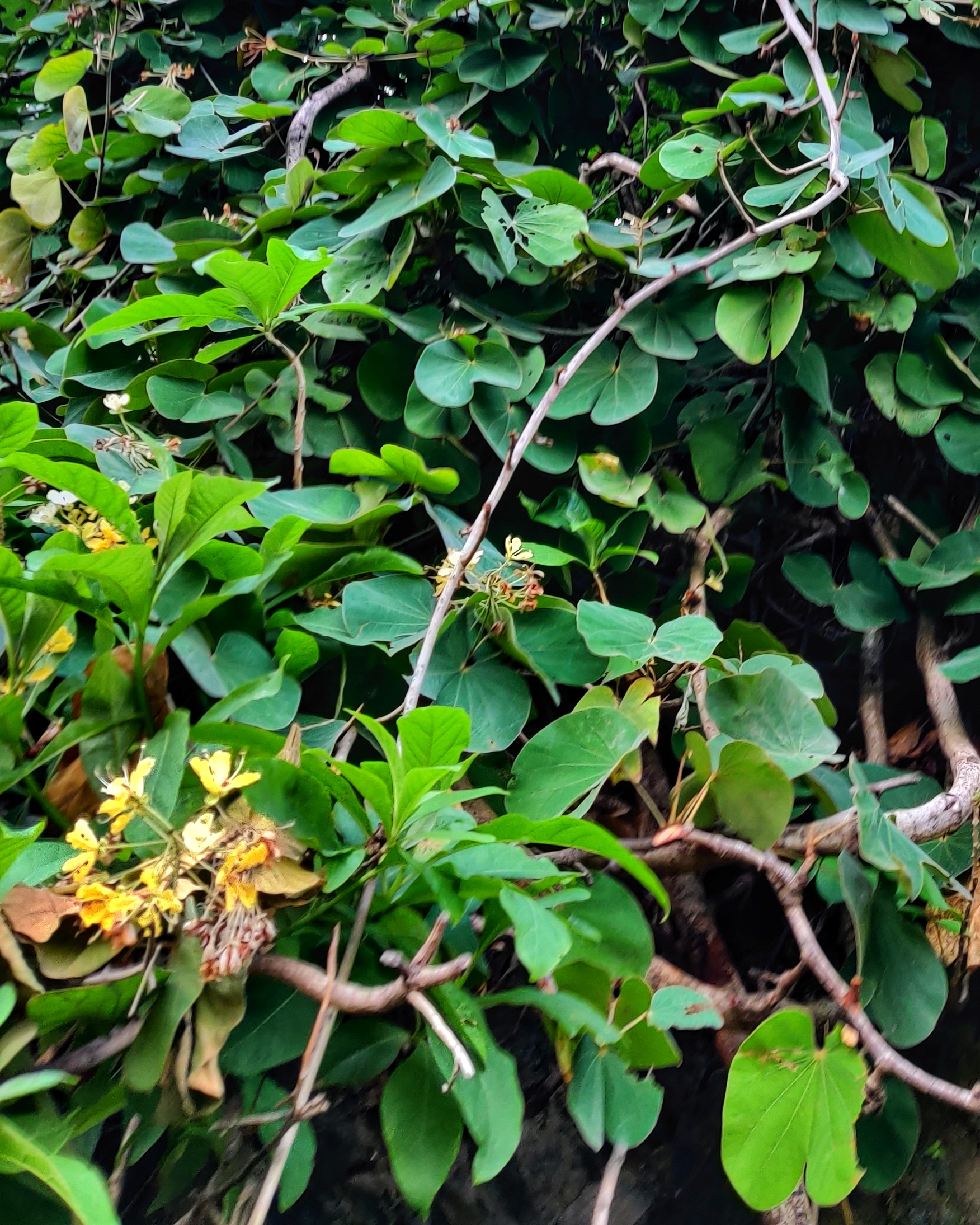
This species can be identified with the help of large bilobed, orbiculate leaves. The whitish flowers are present in rounded clusters which turn yellow when old. The fruits are in the form of large flat woody pods with seeds inside
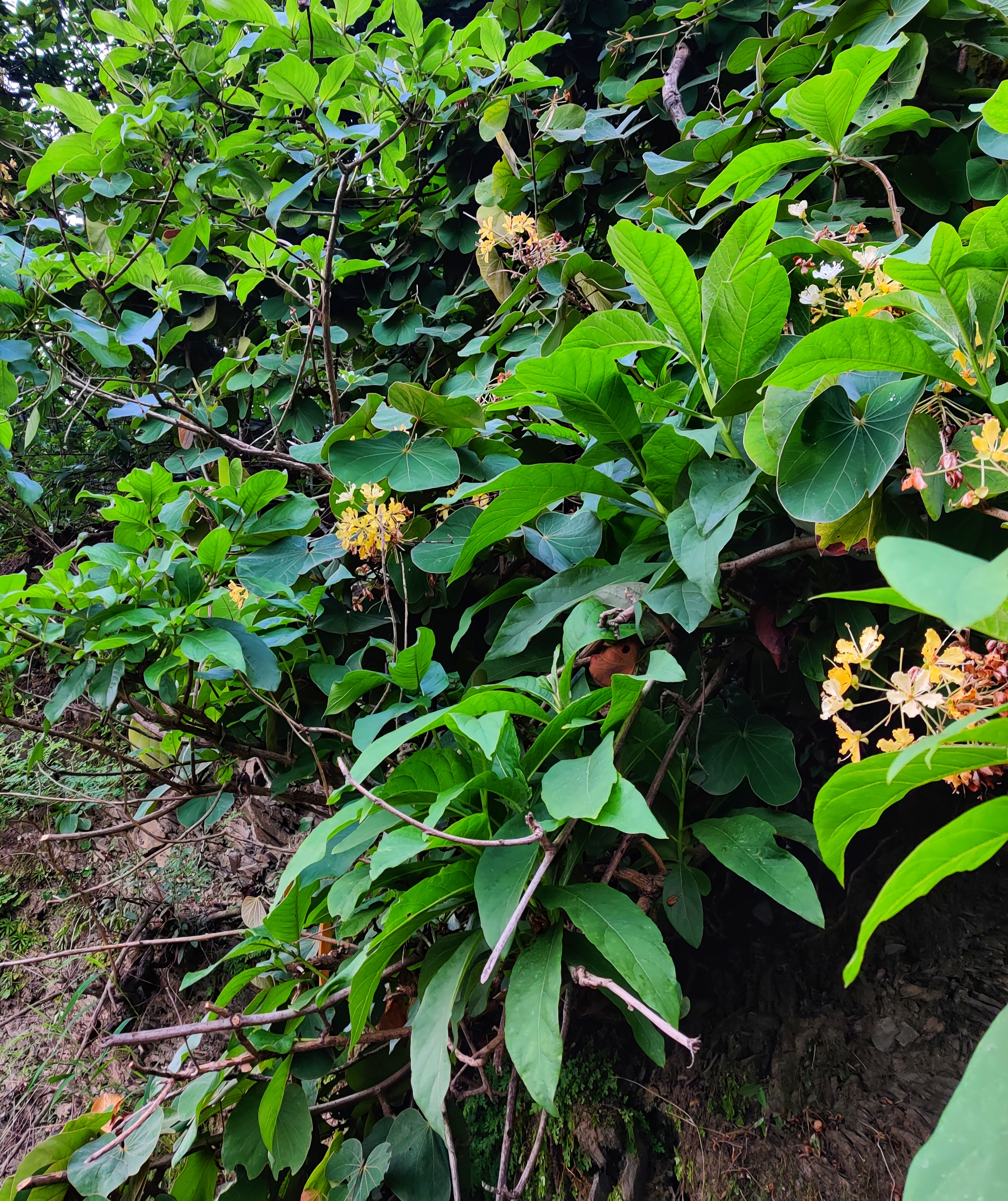
Although this taxon has not yet been assessed by IUCN Red List of Threatened Plants, efforts must be made towards the same so that actual status of the plant in its natural habitat can be determined. Moreover, sincere efforts should be take by forest department, local NGOs, rural livelihood development agencies and cottage industries to incorporate leaves of Bauhinia vahlii species to manufacture eco-friendly serving plates, cups etc and explore new avenues. The fibre of the plant can be technologically upgraded to create various items of daily use. These climbers can also help combat deforestation and high rate of soil erosion and carbon sequestration ofcourse with proper forest management practices.
http://www.chandrimadebi.com
Thank you!!!
Like, share and subscribe. 🙂
https://www.facebook.com/Dr.ChandrimaDebi/
https://www.instagram.com/debichandrima/
https://youtu.be/Y8YCLKTq0Pg
https://www.sumanmitra.com/
©All images and content are subjected to copyright
© 2019 – 2021 chandrimadebi.com
- Exploring Soil Texture Outdoors: Learning STEM Through the FAO Ribbon Test
- Phenology for Kids: Exploring Nature-Based Learning Opportunities
- From Nature to Plate: A Student’s Guide to Foraging
- Nature’s Rhapsody of Season Change: Landour, Mussoorie
- A Tale of Two Lantana Flowers: Landour, Mussoorie
biodiversity blog blogger blogging botany climate change clouds conservation deforestation Dehradun early childhood education ecology education environment environment education featured flora flower forest forestschool geology Himalaya Himalayas Landour Mussoorie nature nature-photography nature based learning nature education nature walk outdoor outdoor education photography plant poem poetry responsible tourism science travel tree tree-photography Uttarakhand wilderness wildlife writing
 Dr. Chandrima Debi's Blog
Hi, Doctor.
I have noticed the same decline in the presence of the species in central India. I want to discuss more on this with you if that’s okay with you. Also, could you recommend some articles or studies that help me understand the species better? Thanks in advance.
-Shivangi Anand
LikeLike
Thank you for sharing your thoughts. This important species is slowly declining in different parts of India. If you want to know more about the species please email me at chandrima.debi@gmail.com
Please like, follow and share my blogsite
LikeLike